For creators & salons
Salon Retail Products Under Your Own Label: What to Launch First
Selling salon retail products under your own label is one of the few ways a treatment business can earn without adding chair hours

Selling salon retail products under your own label is one of the few ways a treatment business can grow revenue without adding chair hours or staff. You already have the two things most new beauty brands pay dearly for: customers who trust your judgement, and a room where they sit still while you explain things. What usually goes wrong is not the product — it is launching too many products, ordering the wrong first range, and expecting the shelf to sell itself. Here is how to choose a first range that actually moves.
Why salon retail plays by different rules
If you have read general advice about starting a beauty brand, most of it assumes you are selling to strangers on the internet. Your situation is the opposite, and that changes nearly every decision.
**You sell through conversation, not through advertising.** A client in your chair asks what she should use at home. That question is worth more than any paid campaign, and it arrives dozens of times a week for free. Your job is to have the right answer sitting on a shelf two metres away.
**Your range should extend the treatment, not compete with it.** The products that sell best in salons are the ones that make the treatment last longer or protect the result. Clients buy them because you explained why, not because the packaging was pretty — though packaging still decides whether they pick it up.
**Your shelf is tiny and your capital is working.** A retailer can afford slow movers. You cannot: every product sitting unsold is money that could have been stock, staff or equipment.
**Returns are personal.** If something irritates a client, she tells you to your face at her next appointment. That is actually an advantage — you get feedback faster than any brand with a customer service inbox — but it means you must be conservative about formulas and honest about what a product does.
**Credibility transfers both ways.** A good own-label range makes your service feel more professional. A cheap-feeling one makes clients quietly wonder about everything else. There is no neutral option, which is why the first range is worth planning properly.
Choosing your first three SKUs
Three is the right number. Fewer looks like an experiment; more spreads your capital and your explanations too thin.
Use these filters, in order:
1. **What do clients already ask you for?** Go through the last two months of conversations. The question you answer most often is your first product. Not the product you find most interesting — the one they ask about. 2. **What do you already use in the treatment room?** A product your team uses daily is one they can describe with real conviction, and clients have already felt it on their skin or hair. 3. **What has a short repurchase cycle?** A cleanser or a shampoo that runs out monthly builds recurring revenue. A serum that lasts half a year does not, however high the margin. 4. **What is simple to explain in one sentence?** If a product needs a paragraph, it will not sell in a salon.
A common structure that works across salon types: one cleanse or prep product, one leave-on product that maintains the treatment result, and one protective product — sun protection for skin, heat or colour protection for hair.
What to leave for later: anything requiring a diagnosis you cannot do in the room, strong actives that raise sensitivity questions, and large ranges with variants by skin or hair type. Variants multiply your minimum quantities without multiplying your sales.
One more category worth noting rather than rushing into: beauty supplements. Clients ask about them, and they repurchase well, but ingestible products sit in a different regulatory category with its own registration and claim restrictions in most markets. Treat it as a separate project once your topical range is established, and confirm the requirements in your market before you commit.

The numbers behind a salon shelf
This is the part most salon owners skip, and it determines whether the range funds itself.
**Start from the retail price your clients will accept, then work backwards.** Look at what they currently buy elsewhere and where your service sits in the market. Your own label should feel consistent with your treatment pricing — noticeably cheaper feels like a downgrade, dramatically more expensive needs a story.
**Build your landed cost properly.** Unit price of the filled product, plus primary packaging, label, outer carton, freight, duty and taxes, payment fees, and a shrinkage allowance for damaged units and testers. Testers matter more in salons than anywhere else: every shelf needs an opened unit, and those are cost, not stock.
**Understand what minimum quantities mean for you.** For private label production the standard minimum is 1,000 units per SKU. Three SKUs therefore means three thousand units. Before you commit, do this sum: how many of each do you realistically sell per month, given your client count and the proportion who buy? Divide the order quantity by that number. If the answer is more than a year of stock, reduce the number of SKUs rather than hoping for faster sales.
**Watch shelf life.** Your stock sits in your salon, not in a distribution centre. Know the shelf life of each product and plan to sell through comfortably within it. This is another argument for fewer SKUs in larger quantities of the things that move.
**Track one number weekly:** units sold per hundred client visits. It tells you more than revenue, because it separates a retail problem from a quiet month.
Packaging that works on a salon shelf
Salon retail has specific packaging requirements that online brands never think about.
**It has to look good at arm's length and up close.** Clients see the shelf from the chair, then hold the product while you talk. Both views matter, which means a clean, legible front and a pleasant tactile finish.
**It has to survive a wet, busy room.** Labels near basins and steamers get splashed. Ask your supplier about water resistance and adhesive suitability, and request a sample you can leave in the treatment room for a few weeks before committing.
**Size for the home, not for the back bar.** Professional sizes feel like equipment. A client wants something that fits in a bathroom cabinet and in a suitcase.
**Choose the dispensing format to match the formula.** Jars suit thicker balms and masks, pumps suit lotions, and airless pump bottles protect formulas with ingredients sensitive to air while giving an undeniably premium feel at a higher unit cost. Tubes are the pragmatic choice for most first ranges: light, affordable, well protected, and easy to make look considered.
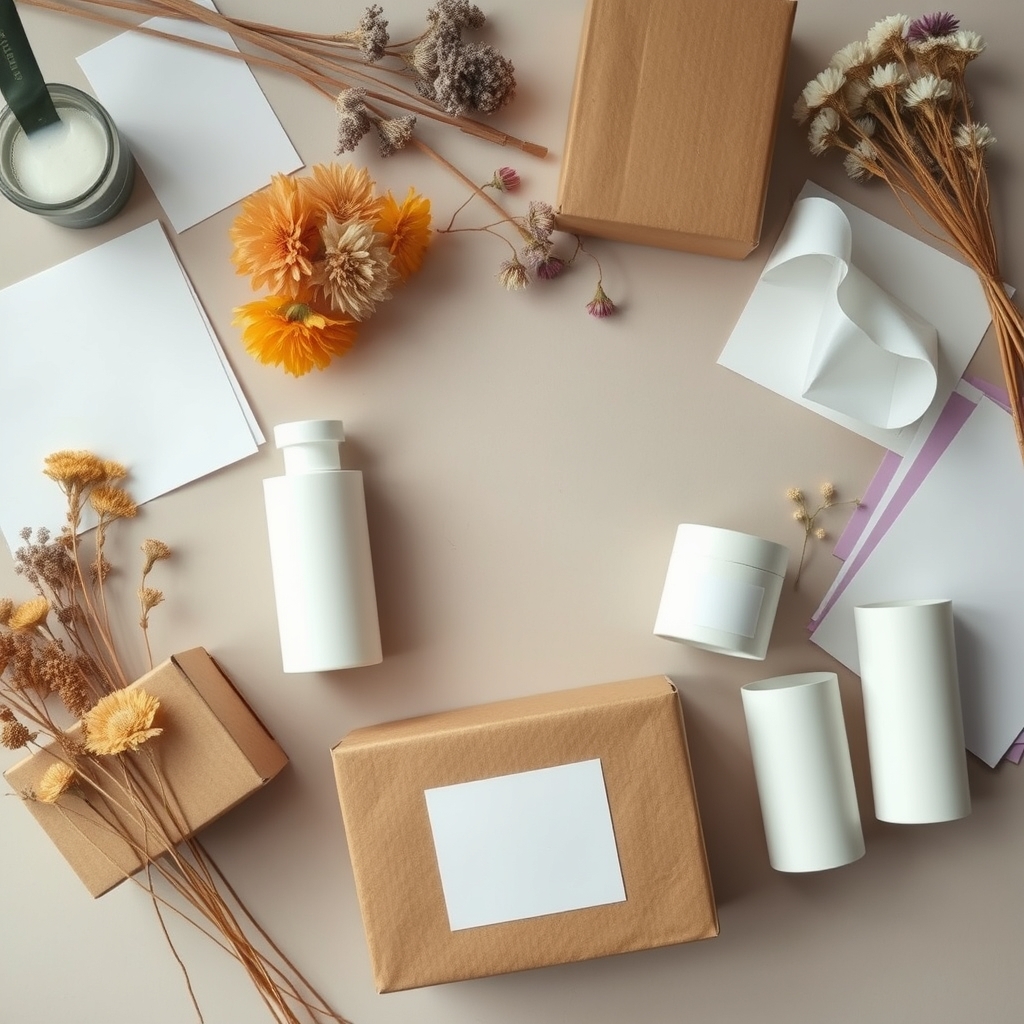
**Keep the range visually coherent.** This is where private label packaging earns its place: three products that clearly belong together look like a brand, while three unrelated designs look like a shelf of samples. The cheapest way to achieve coherence is one pack shape and one label layout across the range, changing only the product name and a colour accent.
**Get the label content right before printing.** Ingredient list, net content, batch number, responsible company details, directions, warnings and any required local-language elements. Requirements vary by market and change over time, so confirm them with your national authority or a regulatory consultant before artwork goes to print.
Getting your team to sell it without the hard sell
A range that nobody recommends is just decoration. The good news is that salon clients want advice, not sales pressure.
**Build the recommendation into the service, not the payment.** The natural moment is during the treatment, while you are explaining what you are doing and why. By the time the client is at the counter, the decision is already made or already lost.
**Give every team member one sentence per product.** Not a script — a sentence they genuinely believe, in their own words, covering what it does and who it suits. Have each person say theirs out loud in a team meeting. The ones who struggle are telling you the product is hard to explain.
**Let the team use the products at home.** Nobody sells convincingly from a leaflet. This is a real cost, and it is the cheapest marketing you will ever buy.
**Make trial effortless.** An open tester on the shelf, and small sample sizes you can hand over for the client to try before buying. A sample given during a treatment converts far better than any discount.
**Measure, but measure gently.** Track units sold per hundred visits by team member so you can coach rather than police. Avoid commission structures that push staff to recommend things clients do not need; in a salon, trust is the asset that produces repeat bookings as well as retail sales.
**Watch your claims.** Your team talking about treating, curing or healing anything moves your product into a regulated category you have not prepared for. Train them to describe what the product does cosmetically, and to say honestly when something is outside their scope.
A launch sequence, and the mistakes to avoid
A workable order of operations:
1. **Decide the three products** from client questions and treatment-room use. 2. **Set target retail prices** from what your clients already accept. 3. **Shortlist manufacturers** and ask each the same questions: available base formulas for these categories, packaging options from their catalogue, what documentation they provide per product, and how they handle a reformulation request. Many Thai beauty suppliers offer established bases in exactly these categories, which keeps development cost down compared with custom formulation. 4. **Approve samples with real users** — your team plus a handful of regular clients, over several weeks, in actual conditions. 5. **Lock the pack, then run stability and compatibility on that final pack.** 6. **Finalise label content and confirm local requirements**, then print. 7. **Produce, and keep retained samples** of every batch. 8. **Soft-launch to your regulars** before any public announcement. They are your most forgiving and most honest audience. 9. **Review at ninety days** using units per hundred visits, and decide what to reorder, reformulate or retire.
The mistakes that hurt most:
- **Launching a wide range at once.** Capital locked up, shelf cluttered, team unable to explain any of it clearly.
- **Pricing from cost upward.** It produces prices that either embarrass your service or leave no margin.
- **Skipping the team trial.** You will discover the texture problem from a client instead of a colleague.
- **Forgetting testers and samples in the budget.** They are a real line item, not an afterthought.
- **Printing before the regulatory check.** The most expensive avoidable error in private label.
- **Treating supplements as an easy extension.** Different category, different rules, different project.
If you would rather have one partner coordinate formulation, packaging and documentation instead of assembling a lab, a packaging supplier and a designer yourself, a managed private label model such as 5FINE (5fineglobal.com) is one route to compare against working with suppliers directly. Either way, start with three products and the question your clients already ask you most.
Need expert support?
Leave your details and our team will get back to you.
FAQ
Frequently asked questions
How many products should a salon own-label range start with?
Three is a sensible target: one cleanse or prep product, one maintenance product and one protective product. Fewer looks like a trial, more spreads your capital and your explanations thin. Each additional SKU adds its own minimum order quantity, label version and shelf space, so expand only after you have sell-through data from the first three.
Should I use the same products on the back bar and on the retail shelf?
Using the same formula in a professional size and a home size is a strong model, because your team already knows how it performs and clients have felt it. Keep the retail size genuinely home-friendly, and price the two formats consistently so clients do not feel the retail version is poor value.
What happens if a client reacts badly to one of my products?
Stop using it on that client, document what happened with dates and the batch number, and contact your manufacturer with those details. This is why you keep retained samples of every batch and why you record batch numbers against stock. Discuss reporting obligations in your market with a local regulatory adviser, since requirements for recording and reporting undesirable effects vary.
Is own-label cheaper than reselling an established professional brand?
The unit margin is usually better, but you take on costs a reseller does not: development, minimum order quantities, packaging, label compliance, testing and the risk of unsold stock. Own label makes sense when you have steady client volume, a clear view of what they buy, and capital you can leave tied up in inventory for a while. If any of those is missing, reselling first and launching own label later is a reasonable path.
Prepared by the Private Label Thai team for informational purposes. Some links may lead to referred partners.
Articles
Related articles

How to Start a Wellness Brand: A Founder's Honest Roadmap
If you've been searching how to start a wellness brand, you've probably noticed two kinds of advice: vague inspiration ("follow your passion!") or overwhelming checklists with numb
The Best First Product for a Beauty Brand: How to Choose Yours
There is no single best first product for a beauty brand, but there is a best first product for your brand — and it is usually not the one founders fall in love with first.
Skincare Brand Identity Ideas: A Founder's Guide to Standing Out
If you've typed "skincare brand identity ideas" into a search bar, you're probably staring at a blank page wondering how to turn a product idea into something people actually remem