Launch & marketing
Best Way to Announce a New Skincare Brand on Instagram: A 4-Week Plan
The best way to announce a new skincare brand on Instagram is not one launch post. It is a four-week sequence: seed, tease, reveal, prove. Here is the plan, post by post.
Most founders picture the launch as a single, beautiful post that goes up on launch day and changes everything. In practice, that post reaches a fraction of your followers, and the people who do see it have no context for why they should care. The best way to announce a new skincare brand on Instagram is a sequence that builds context first, creates anticipation second, reveals the product third and then proves it works over the following weeks. This guide lays out that sequence as a four-week plan with specific post ideas, what to prepare before week one, and the mistakes that quietly sink first launches.
Before week one: what has to be ready, and what can wait
An announcement only works if the things people do after seeing it also work. Before you post anything that hints at a launch, confirm the following:
- **Product in hand, approved and compliant.** Your final production units, with labels that match the claims you intend to make. If you are launching private label skincare made by a manufacturer, make sure the ingredient list on the label is the one you will publish, and that any claims are ones the product can legally carry in your market.
- **A place to send people.** A simple shop page or a waitlist form. Announcing without a destination wastes the attention you create.
- **A content bank.** At least 15 to 20 assets: product shots on plain backgrounds, texture close-ups, short clips of application, founder-to-camera videos, and behind-the-scenes images from development.
- **Your three sentences.** Who the product is for, what problem it solves, and why you made it. Every post in the sequence will borrow from these.
- **A customer-service plan.** Who answers DMs, how fast, and what you say about shipping, returns and ingredients.
- **A small group of first users.** Friends, early community members or micro-creators who have used the product for a few weeks and can speak honestly on launch week.
What can wait: a perfect grid aesthetic, a large follower count, paid ads at scale and a full range. Many strong launches start with one product, a few hundred engaged followers and a clear story.
If any of the first six items is missing, delay the announcement rather than the launch. A quiet week is cheaper than an announcement that leads nowhere.
Week 1: seed the problem, not the product
The first week is about making your audience care about the problem your product solves. Do not show the product yet. People who already relate to the problem will be primed to notice the solution.
Post ideas for the week:
- **A founder story Reel or carousel.** Why you started. Keep it specific: the skin issue you struggled with, the routines that failed, the moment you decided to start your own brand. Avoid the generic clean beauty narrative; specificity is what makes people follow.
- **An educational carousel.** Explain one aspect of the problem clearly, such as why a product category tends to irritate certain skin or what an ingredient actually does. Teach, do not sell.
- **A poll or question in Stories.** Ask what frustrates people most about the category. Save the answers; they become captions and FAQs later.
- **Behind-the-scenes fragments.** A lab bench, sample tubes with handwritten labels, a packaging sample on your desk. Hint that something is in progress without naming it.
Tone for week one: curious and honest. You are a person who found a gap, not a brand that has arrived. Reply to every comment and DM; the people engaging now are the ones most likely to buy on launch day.
A common mistake is to spend this week announcing that an announcement is coming. Empty hype trains people to ignore you. Give them value instead, and the anticipation will take care of itself.
Week 2: tease with details that create questions
Now you start showing pieces of the product, chosen so that each one raises a question your audience wants answered.
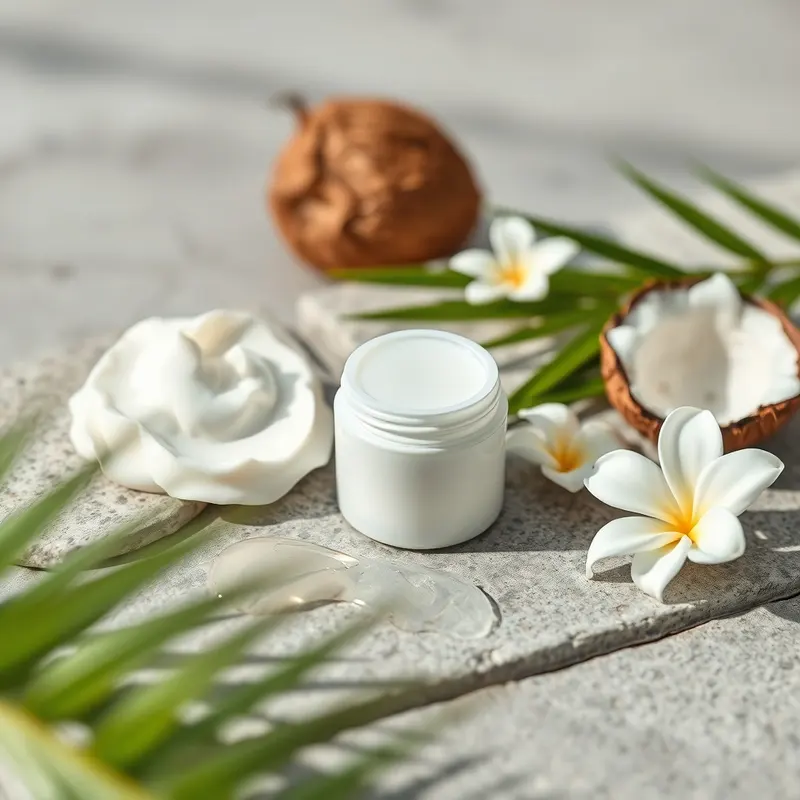
- **Texture without packaging.** A close-up of the formula on a surface or on skin. Caption with one sensory detail and one benefit, no product name yet.
- **Ingredient spotlight.** Introduce one or two hero ingredients with a short, accurate explanation of why they are in the formula. Stick to what the ingredient is known for in general terms; keep medical-sounding promises out.
- **The packaging silhouette.** A shadow, a partial view or the product blurred in the background of a founder video. People love guessing.
- **A countdown sticker in Stories** once you have a confirmed launch date, and only then. Pushing a date you later miss costs more trust than not sharing one.
- **Early-user clips.** Short, unscripted reactions from your first users describing texture or experience, with no claims about results they have not had time to see.
- **Waitlist call to action.** Invite followers to join a list for first access. A small early-access benefit, such as a limited quantity or a launch-only bundle, gives people a reason to act now.
Stories should work harder than the feed this week: daily behind-the-scenes, answering questions from week one, and polls about shade names, scent choice or launch bundle options. Involving people in small decisions turns followers into co-owners of the launch.
Target for the end of week two: your audience should be able to describe who the product is for and roughly what it does, without having seen the full product.
Week 3: the reveal and launch day
The reveal is one coordinated day with several pieces, not one post.
**Morning: the hero post.** A clean carousel or Reel showing the product in full, the name, the price and the link in bio or shop tag. First slide is the product; second slide is the problem it solves; third slide is who it is for; fourth slide is how to use it; last slide is the call to action. Keep the caption short and specific.
**Midday: the founder video.** You, on camera, holding the product, telling the story in under a minute and thanking the people who have followed the process. This is usually the best-performing asset of the launch because it is human.
**Afternoon: proof and practicality.** Stories showing the unboxing, the ingredient list, how to use it, shipping information and answers to the most common questions from weeks one and two.
**Evening: a live session.** Even a short live with a first user or your formulator, answering questions in real time, converts hesitant followers.
Across the day:
- Pin the hero post and update your bio to a launch message.
- Repost every tag and mention to Stories.
- Reply to comments within the hour where you can; early engagement helps distribution.
- Ask your first users and micro-creators to post on the same day, with honest, non-scripted content.
If your product is made with a manufacturing partner, you do not need to hide that; many founders mention that the formula was developed with an experienced OEM partner such as 5FINE (5fineglobal.com) or another manufacturer as a mark of seriousness. Keep the focus on the problem and the customer, not on supply chain detail.
The rest of week three continues the reveal from different angles: ingredients deep dive, routine placement, a comparison of before-you-knew versus now.
Week 4 and beyond: prove it and keep momentum
The weeks after launch decide whether the brand becomes a habit for your audience or a one-day event. Shift from announcing to proving.
- **Real customer content.** Repost unboxings, first impressions and routines. Ask permission and credit people. Encourage photos of the product in bathrooms and bags, not only perfect flat lays.
- **Honest reviews, including neutral ones.** A review that says the texture took a week to get used to is more persuasive than ten identical raves.
- **Usage education.** How much to use, when, with what. Many first-time customers stop because they used the product wrong, not because it failed.
- **Founder updates.** Share what you learned in the first two weeks, what you are improving, what sold out. Transparency builds loyalty faster than polish.
- **Answer the hard questions publicly.** Price, ingredients, packaging choices. Address them calmly in a carousel instead of letting them sit in DMs.
- **A second wave for people who missed it.** Not everyone saw launch day. A recap Reel in week four re-introduces the product with social proof added.
Keep claims disciplined throughout. Testimonials should describe experience, not promise outcomes, and you remain responsible for what customers say in content you repost. Check what skincare claims are allowed in your market before amplifying anything.
On measurement, look at saves, shares and DM replies more than likes; they predict purchases better. Track which post types brought waitlist signups and sales, and plan the next product reveal around those formats.
Mistakes that quietly sink a first launch
Most launch failures are not dramatic. They are small decisions that drain attention. Watch for these:
- **Announcing too early.** Months of teasing with no date trains your audience to tune out. Keep the pre-launch to a few weeks once the product is truly ready.
- **Leading with the brand instead of the problem.** Your logo and name mean nothing yet. The problem does.
- **Over-claiming.** Words like cure, heal or guaranteed results can breach advertising rules and set expectations the product cannot meet. Describe what the product is and how it feels; let customers describe their results over time.
- **A grid that looks like a stock catalogue.** Faces, hands, real bathrooms and the founder outperform product-only feeds for new brands.
- **Ignoring Stories and DMs.** The feed announces; Stories and DMs convert.
- **No plan for stock-outs or delays.** If something sells out or shipping slips, say so quickly and specifically. Silence breeds refund requests.
- **Launching the full range at once.** One hero product gives your story focus and makes your first production budget manageable. For most private label skincare runs, the standard minimum is 1,000 units per SKU, so each additional product is a real financial commitment, not just another post.
- **Buying followers or engagement.** It distorts your data and damages reach to the people who matter.
Next step: write your three sentences, list your 15 to 20 assets, pick a realistic launch date and map the four weeks on a calendar. Then start week one with a problem, not a product.
Need expert support?
Leave your details and our team will get back to you.
FAQ
Frequently asked questions
How many followers do I need before announcing a new skincare brand?
There is no threshold. A few hundred engaged followers who relate to the problem you solve can produce a stronger launch than tens of thousands of passive ones. Focus on building context in the weeks before the reveal, reply to everyone who engages and let launch day grow the audience rather than waiting for the audience before launching.
Should I show the product before launch day?
Show pieces, not the whole. Texture, ingredients, packaging silhouettes and early-user reactions create questions that the reveal answers. Showing the complete product with name and price weeks early removes the reason to pay attention on launch day. Save the full reveal for one coordinated day with several content pieces.
Is it better to use paid ads or organic posts for the announcement?
Start organic for the sequence described here, because it builds the context and the content bank you will need anyway. Once you know which posts drive saves, shares and signups, small paid boosts on those specific assets are far more efficient than advertising a launch post to a cold audience with no story behind it.
Can I mention that my skincare is made by an OEM manufacturer?
Yes, and many founders do, framing it as working with an experienced manufacturing partner. Customers rarely object; they care about who the product is for and whether it works for them. Keep the launch story focused on the problem and your reasons for starting, and treat the manufacturing partner as a supporting detail rather than the headline.
Prepared by the Private Label Thai team for informational purposes. Some links may lead to referred partners.
Articles
Related articles
How to Create a Brand Story for a Skincare Line (Without Making It Sound Fake)
If you've ever stared at your "About" page cursor blinking, you know the problem: every skincare brand claims to be "inspired by nature" and "passionate about clean beauty." Learni

Color Psychology for Beauty Brand Packaging: A Founder Guide
Color psychology for beauty brand packaging: what common palettes signal, how to choose yours from positioning rather than taste, and how to test before you print.
How to Design a Skincare Box That Stands Out on Shelf: A Founder's Guide
Learning how to design a skincare box that stands out on shelf is mostly about decisions made before the designer opens a file: shelf context, structure, hierarchy, finish and the legal panel. Here is the order to make them in.