For creators & salons
How Estheticians Can Sell Their Own Skincare Line in the Spa
You already do the hardest part of selling skincare every day: you touch the client's skin, explain what it needs and watch it change over weeks. The question of how estheticians c
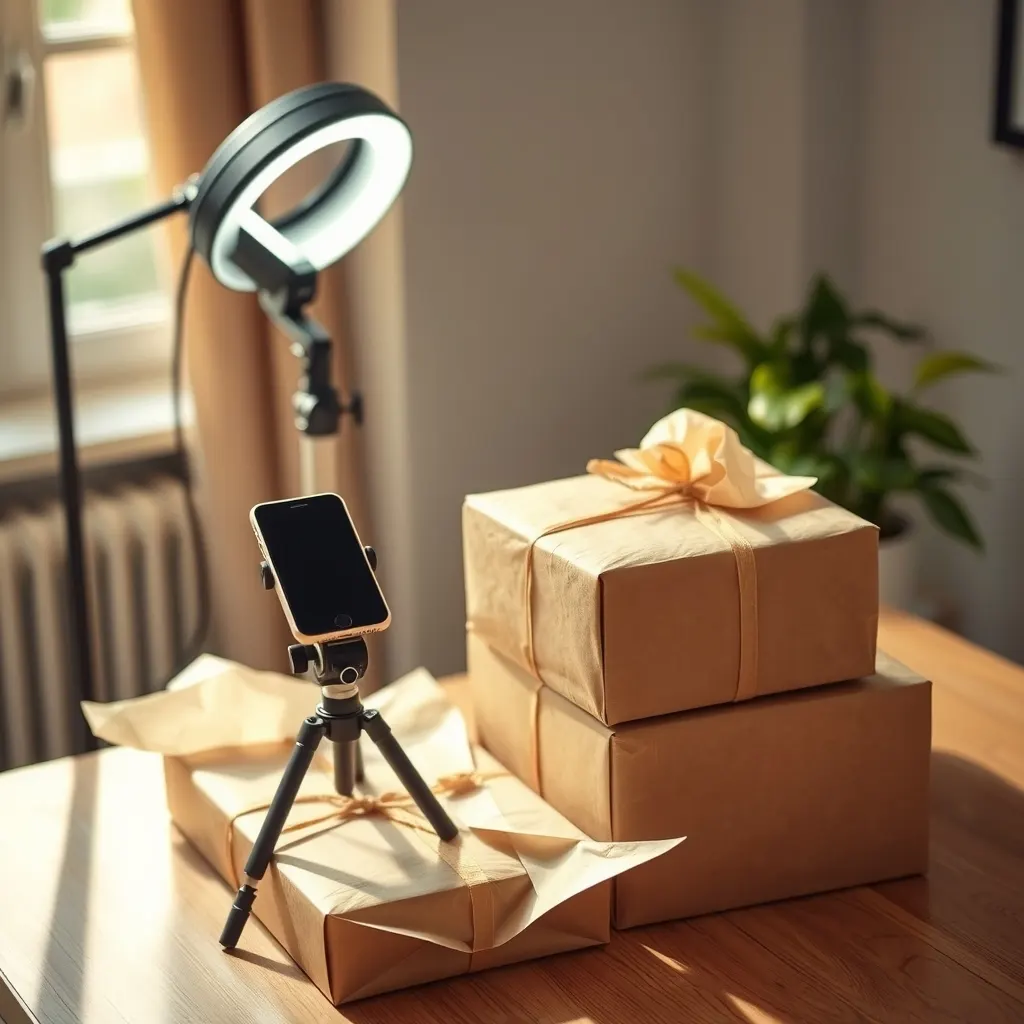
You already do the hardest part of selling skincare every day: you touch the client's skin, explain what it needs and watch it change over weeks. The question of how estheticians can sell their own skincare line in the spa is really about turning that trust into products with your name on them, without turning your treatment room into a sales floor. Here is the plan, from choosing the first products to the retail conversation itself.
Why an esthetician's own line sells differently from a brand on the shelf
Most spas retail someone else's brand, earn a margin on it and compete with every online discounter carrying the same product. Your own label changes the economics and the conversation in three ways.
**The product is only available from you.** A client who loves the serum you used in her facial cannot find it cheaper online, because it does not exist anywhere else. That removes the awkward moment when a client photographs the bottle to buy it elsewhere.
**The recommendation is already made.** You are not persuading someone to try a product; you are continuing the treatment at home. Estheticians who sell their own line talk about homecare, not retail, and the client hears it as part of the service.
**Margins belong to you, but so does responsibility.** With a third-party brand, the manufacturer handles formulation, safety, labelling compliance and stock. With your own line, your business becomes the brand owner. That means you commission the products, approve the formulas, hold the inventory and answer for what is on the label. It is a real business line, with costs that arrive before revenue does.
Before going further, be honest about two things. First, do you have enough treatment clients to sell through a first production run? Second, are you prepared to spend the time on packaging, paperwork and stock management that a brand demands? If both answers are yes, the rest of this guide is for you. If the second is no, a third-party professional brand may still be the better fit for now, and that is a sensible decision rather than a failure.
Choosing the first products: start where your hands already are
The temptation is to launch a complete ten-step routine. Resist it. The products that sell in a spa are the ones that extend what you did in the treatment room, and most estheticians can identify them in five minutes by looking at their service menu.
**Map products to treatments.** For each of your most-booked services, ask: what would I want this client to use at home for the next four weeks? A hydrating facial points to a cleanser and a hydrating serum or mask. A brightening treatment points to a vitamin C or niacinamide serum and a sunscreen. A back or body treatment points to a body scrub and a body oil or lotion.
**Start with three to four SKUs.** A typical first range for a facial-led spa is a gentle cleanser, one hero serum, a moisturiser and one mask or treatment product. For a body-led spa it might be a scrub, an oil and a lotion. Each SKU carries its own minimum order, so fewer products mean lower risk.
**Use stock formulas for the first run.** Reputable manufacturers offer tested base formulas that you adapt with scent, texture tweaks and your own packaging. Custom formulation is slower and costlier, and for a first run you do not yet know which product will become your bestseller. Beauty and cosmetics manufacturing partners in Thailand are a common choice for spa owners because of the depth in gentle, plant-forward bases, but compare several manufacturers wherever they are.
**Plan for the standard minimum.** For OEM or private label production, the standard minimum is 1,000 units per SKU. Divide that by the number of clients you treat each month to see how long the first run will take to sell through. If the number frightens you, cut a SKU rather than cutting corners on quality.
**Leave the ambitious products for later.** Retinoids, high-strength acids, sunscreens and eye products are harder to formulate, test and claim. Launch them once the first range has proven that your clients buy from you.
Working with a private label manufacturer as a small spa
Spa owners often worry they are too small to be taken seriously by a manufacturer. The reality is that many private label producers work with small professional brands precisely because estheticians understand skin and give clear briefs. What they need from you is structure.
**Write a one-page brief.** Describe your clients (age, skin concerns, climate), the treatments each product supports, the texture and scent you want, ingredients you insist on and ingredients you refuse, your positioning (clinical, natural, luxurious) and your target retail price band. A clear brief gets you a clear proposal.
**Ask the right questions.** - Which stock bases do you recommend for each product, and what testing has already been done on them? - What is included in the price: formula, filling, primary packaging, labels, outer box? - Which documents do you provide for each product, and which will I need to arrange in my own country? - How do samples work, and how many revision rounds are included? - What is the standard minimum per SKU and how is it structured across variants?
**Choose between routes.** You can work directly with a factory, which gives you control but requires you to coordinate lab, packaging suppliers, designers and freight yourself. Or you can work with a full-service partner that manages development and production through certified partner factories and coordinates the pieces for you; 5FINE is one example of that model, and there are others. Many spa owners prefer the second route for a first launch because their time is already committed to clients.
**Private label packaging decisions.** Pumps and tubes suit treatment-room hygiene better than open jars. Choose components that are available long-term, so your second run looks like the first. Keep the design calm and legible; your brand is your reputation, not a loud carton.
**Get everything in writing.** Specifications, approved sample reference, payment schedule, what counts as a defect. This protects both sides.
Compliance, labelling and claims: the part you cannot delegate entirely
When you retail a third-party brand, the brand carries the regulatory weight. When you own the label, your business does. The good news is that the requirements are knowable; the bad news is that they differ by country and change over time, so treat everything here as a starting point to verify with your local regulator or a regulatory consultant.
**Product notification or registration.** Most markets require cosmetics to be notified or registered before sale, with a responsible person or company named. Find out whether your spa business can be that responsible person, what documents you need from the manufacturer, and how long the process takes in your country.
**Safety documentation.** Many jurisdictions expect a safety assessment or product information file for each product. Your manufacturer provides formulation details, stability and microbiological data; the assessment itself is often commissioned locally.
**Labelling.** Ingredient list in the required format, net content, batch number, expiry or period-after-opening, usage warnings, and your business name and address. Design the label after you know the rules, not before.
**Claims.** This is where estheticians, who are used to speaking freely in the treatment room, get caught. Treats acne, heals eczema, repairs skin and similar phrases push a cosmetic toward a medicinal classification in many markets. Describe what the product does cosmetically (hydrates, smooths the look of, brightens the appearance of) and keep the clinical language for your professional consultations.
**Insurance.** Tell your insurer you are now a brand owner. Product liability cover is different from treatment liability cover.
**Keep records.** Batch numbers sold, client complaints, adverse reactions. If something goes wrong, you need to show what you sold to whom and when.
The retail conversation: selling homecare without feeling like a salesperson
The single biggest reason spa retail fails is not the product; it is that the esthetician never mentions it. Most feel that selling undermines the care they provide. Reframe it: prescribing homecare is part of the treatment, and a client who leaves without a plan gets worse results and blames the facial.
**Build it into the service, not the checkout.** - During consultation, ask what the client uses at home. You learn what to recommend and what to replace. - During treatment, name the products as you use them: this is our hydrating serum, you will feel it absorb quickly. Clients remember what they felt. - At the end, write a short homecare plan on a card: morning and evening, two or three products. Hand it over as instructions, not an offer.
**Price for the room you are in.** Clients paying for professional treatments expect professional pricing. Underpricing your own line signals that it is lesser than the brand you used to stock. Set a retail price that reflects quality and leaves margin for staff incentives.
**Make it easy to say yes.** Display the range where the client sits after treatment, not at the till. Offer a starter set that matches the most common homecare plan. Let clients repurchase by message, with collection or local delivery.
**Train the team.** If you have other therapists, agree on language, give them the product knowledge, and reward homecare recommendations fairly. A small commission or a team target works better than pressure.
**Follow up.** Two weeks after the first purchase, a short message asking how the skin feels does two jobs: it shows care and it prompts the next appointment. Over months, this is what turns a first production run into a repeat order and your spa into a brand.
Budget, timeline and the mistakes first-time spa brands make
A spa skincare line is a modest investment compared with a retail brand launch, but it is still an investment that arrives before revenue. Plan it as one.
**Cost lines to expect** - Development and samples, including any revision rounds and testing the manufacturer charges for. - Production of the first run at the standard minimum of 1,000 units per SKU. - Packaging components, labels and outer boxes; custom shapes add tooling. - Design: logo, label artwork, a simple brand guide. - Compliance: safety assessment, notification fees, any patch testing you want for claims. These are usually paid locally and sit outside the manufacturer's quote. - Freight, duties and local taxes. - Working capital: stock sits on shelves for months before it is sold.
**Timeline shape** Development and sampling first, then compliance and packaging in parallel, then production, then shipping and registration before launch. Ask the manufacturer for a schedule and add your own country's registration time. Launch dates set by marketing before the schedule exists are the most common cause of disappointment.
**Mistakes to avoid** - Launching too many SKUs. Four products that sell beat ten that gather dust. - Choosing packaging for the photo, not the treatment room. Jars look lovely and get contaminated. - Skipping the compliance step because the manufacturer has certificates. Their certificates cover manufacturing; your market registration is separate. - Making medical claims out of habit. - Pricing low to be kind. It undermines the brand and the margin you need to reorder. - Forgetting that the second run needs cash too. Reorder before you sell out, and track sell-through from day one.
If, after reading this, you want to start smaller than a full skincare range, consider a single hero product that every client uses, such as a cleanser or a body oil. One well-chosen product with your name on it teaches you the whole process at the lowest possible risk, and the knowledge transfers to everything you launch after.
Need expert support?
Leave your details and our team will get back to you.
FAQ
Frequently asked questions
How many products should an esthetician launch in a first spa skincare line?
Three to four is the sweet spot for most spas: a cleanser, one hero serum or treatment, a moisturiser and perhaps a mask or body product that extends your most-booked service. Each SKU carries its own minimum order, so a smaller range lowers risk and lets you learn which product your clients actually repurchase before you expand.
What is the minimum order for a private label skincare line?
For OEM or private label production, the standard minimum is 1,000 units per SKU. Divide that by your monthly treatment clients to estimate how long a run will take to sell through. If the figure is uncomfortable, reduce the number of SKUs or start with one hero product rather than compromising on formulation or packaging quality.
Do I need any registration to sell my own skincare line in my spa?
In most countries, yes. Cosmetics usually need to be notified or registered with a named responsible person before sale, and many markets expect a safety assessment per product. The manufacturer provides technical documents; the local registration is your responsibility as brand owner. Check with your regulator or a regulatory consultant early, since the process adds time before launch.
Can I make claims about treating acne or eczema with my own products?
Be very careful. Phrases such as treats, heals, cures or repairs tend to push a cosmetic into a medicinal category in many markets and can trigger enforcement. Use cosmetic language instead: hydrates, soothes the look of, improves the appearance of. Save the clinical discussion for your professional consultation, where you are advising rather than labelling a product.
Prepared by the Private Label Thai team for informational purposes. Some links may lead to referred partners.
Articles
Related articles

How to Calculate Break Even for a Skincare Brand (A First-Timer's Walkthrough)
Before you pick a jar, a logo, or a launch date, there's one number that should keep you up at night in a useful way: your break-even point. Knowing how to calculate break even for
What Documents Are Needed to Export Private Label Cosmetics?
If you are asking what documents are needed to export private label cosmetics, you are probably closer to launch than to idea, and this is the stage where paperwork decides whether your first shipment moves or sits.
How Long Does It Take to Get Cosmetic Registration Approval?
Every first-time founder asks the same question before the launch date goes on the calendar: how long does it take to get cosmetic registration approval? The honest answer is that